

DIYing to Live
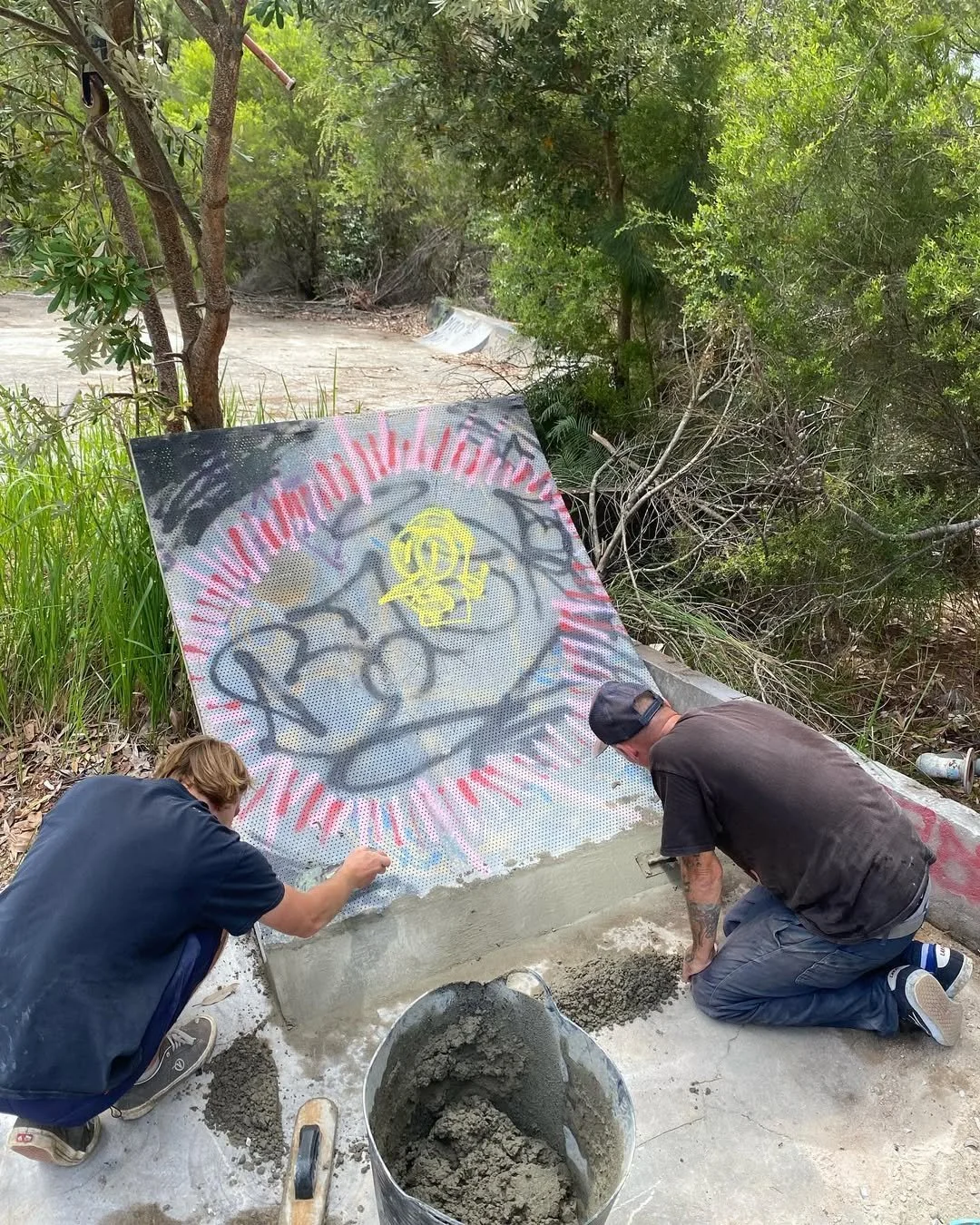
Photographer: Luke Brown
Words are dumb. The first time I heard the word bespoke, I thought it had something to do with a BMX, like how they say spokes in French or something. Now I think about it, that would be ‘ lespoke’. Anyway, it’s a stupid word, just say “custom-made” or “not Ikea” or “what I asked for”.
On the other hand, acronyms are rad. Kind of like emojis, but before there were emojis. And because humans are becoming lazier by the second, acronyms and abbreviations are replacing entire sentences, IYKWIM.
By far, my favourite acronym is DIY. I love everything about it: the way it sounds, how it cuts an entire syllable from the original phrase, and the fact that it’s made of just three letters is lit. The list goes on.
So let’s talk a little about DIYs. What they are, why they’re important, what to do (and don’t do), and how we can all do our part to keep the DIY dream alive.
So what is a DIY? Is it rubbing back a ledge or curb and applying some clear spray and wax? Nope. Is it filling in a crack at the top of a stair set? Nah. Is it cutting or ripping out skate-stoppers? Getting warmer, but still no.
What is a DIY?
I see it like this: a true DIY is any time an individual or a group takes on the construction or modification of an existing area (more often than not, without permission) with the sole purpose of creating something that was missing from the world. Something fun and truly unique.
These projects can range from a simple concrete quarter-pipe against a wall in a forgotten car park to large-scale builds that use every wall of an abandoned building and every inch of an old sports ground.
DIYs can range in cost from a measly fifty bucks to thousands of dollars. They can take an hour or sometimes years to build and can have the same lifespan. They are someone’s idea. Someone’s hard work. Someone’s risk. Built by skaters, for skaters.
Why Are DIYs Important?
It feels like a shiny new skatepark opens every other week in Australia. And while public skateparks—with their engineer-certified everything, abundant parking, matching colour schemes, and piles of wood chips—are fun and promote skateboarding to the masses, they are also, well, public.
These parks have to accommodate beginners, and they can’t incorporate anything too "out there" or "gnarly" beyond, maybe, the depth of a bowl. Public parks have to promote safety within an activity that is ultimately unsafe.
This is exactly why we need DIYs. They are places where the conventional (and sometimes cookie-cutter) design principles of public skateparks are thrown out the window, set on fire, and used as fill for a ledge. They are a space that reminds us that skateboarding, despite its rise in popularity, started as a subculture of misfits, malcontents, and rule-breakers.
I could say something about how skateboarding is an artistic expression and DIY builds are an extension of that, but I feel like this part of the article is already too long. NEXT.
Do's and Don'ts
Let’s break this down into scenarios and some general guidelines for DIY spots. While these suggestions are aimed at spots that are obviously low-key and not "blown up," they should apply to any place created in the spirit of DIY.
Scenario 1: You’re trying to find the location of a DIY you’ve seen on Instagram.
DON’T:
Ask for the location from someone who doesn’t have the right to tell you (e.g., not a builder, caretaker, or contributor).
Ask for the location in the comments of a post—this should be obvious.
Ask without being polite. Don't send a DM that says "where's this" or "pin."
Ask another person if you’ve been denied by a builder, caretaker, or contributor. If people want to protect their efforts, respect that.
DO:
Offer to help out. Offer to lend a hand or contribute some cash for the next stage.
Expect to be told no. That’s just some life stuff right there.
Scenario 2: You’re in! Someone has said yes to you having a roll at the spot, and you have the address.
DON’T:
Think that the "OK" applies to your six friends too. This should be obvious, but often isn't.
Leave your garbage behind. It’s not a public park; there aren’t garbage trucks coming in the morning.
Draw attention to the spot. Leave your JBL speaker, BBQ, fireworks, brass band, generator, and floodlights at home. Anything that's going to make a nosy neighbour’s dialling finger itchy should be left behind.
Use wax or anything else to grease up obstacles unless you are adding to what’s already there. Some people don’t want their stuff tampered with.
DO:
Bring a broom, blower, some old towels, and other clean-up stuff. Giving the place a clean is the least you can do.
Say thank you to the people who gave you the address and put in the work.
Ask if you can help out in any way.
Now that you have a little knowledge on the whys, whats, and hows of not pissing anyone off, let’s talk about the most important part: what you can do to make a difference.
In my experience, the DIY community is a resourceful and receptive bunch. They’re the people who don’t just complain about what the new skatepark lacks; they're the ones getting dirty and talking with a trowel.
So once you’ve made some connections, don’t just be a spectator. Make suggestions for new obstacles, get your pants dirty, and ask for tips on working with concrete. Learn the trade and pay it forward. While you’re out exploring, keep your eyes peeled for potential new spots and share them with the crew. A DIY spot is a constant work in progress, and every extra hand, every bag of cement, and every new idea helps keep it thriving.
The beauty of DIY is that it's an invitation to create. The spots you skate today were built by someone just like you. The spots of tomorrow? They're waiting for your ideas and your effort. So, what are you going to build?